<?xml version="1.0" encoding="utf-8"?><feed xmlns="http://www.w3.org/2005/Atom" ><generator uri="https://jekyllrb.com/" version="3.10.0">Jekyll</generator><link href="https://bananabenana.github.io/compu-micro-bioinfo-molecu-net/feed.xml" rel="self" type="application/atom+xml" /><link href="https://bananabenana.github.io/compu-micro-bioinfo-molecu-net/" rel="alternate" type="text/html" /><updated>2026-10-11T14:05:50+00:00</updated><id>https://bananabenana.github.io/compu-micro-bioinfo-molecu-net/feed.xml</id><title type="html">compu-micro-bioinfo-molecu-net</title><subtitle>A blog by Ben Vezina</subtitle><author><name>Ben Vezina</name><email>bd.vezina@gmail.com</email></author><entry><title type="html">AI firms conduct asymmetrical warfare on science and the adjustments to be considered for bioinformatics and computational biology research</title><link href="https://bananabenana.github.io/compu-micro-bioinfo-molecu-net/posts/AI_firms_asymmetrical_warfare/" rel="alternate" type="text/html" title="AI firms conduct asymmetrical warfare on science and the adjustments to be considered for bioinformatics and computational biology research" /><published>2026-10-11T00:00:00+00:00</published><updated>2026-10-11T00:00:00+00:00</updated><id>https://bananabenana.github.io/compu-micro-bioinfo-molecu-net/posts/AI_firms_asymmetrical_warfare</id><content type="html" xml:base="https://bananabenana.github.io/compu-micro-bioinfo-molecu-net/posts/AI_firms_asymmetrical_warfare/"><![CDATA[<h2 id="the-openai-maths-dump-and-what-ai-news-is-worth-paying-attention-to">The OpenAI maths dump and what AI news is worth paying attention to</h2>

<p>I’ve been reflecting on the recent <a href="https://github.com/openai/math">OpenAI maths dump</a> [1] and <a href="https://doi.org/10.1126/science.aej2213">Google DeepMind’s AlphaProof</a> [2] from the perspective of a research microbiologist and wanted to figure out and condense my thinking and few main conclusions. These are my reactionary thoughts and I suppose my views may change in the future.</p>

<p>Normally I tend to ignore most AI news, viewing it skeptically as hype driven by parties with conflicting interests including but not limited to:</p>
<ul>
  <li>Investors</li>
  <li>Techbro-who-were-previously-shilling-crypto-and-NFTs</li>
  <li>Clickbait unoriginal copy-paste journalism underscoring the hollowness of the modern web-media landscape</li>
  <li>Over-excited non-experts who have little to no understanding of the things they are hyping who read copy-paste journalism</li>
  <li>Bots/LLMs
    <ul>
      <li>Which now comprise <a href="https://www.humansecurity.com/learn/resources/2026-state-of-ai-traffic-cyberthreat-benchmarks">the growing majority of internet traffic</a> [3]</li>
      <li>And comprise <a href="https://www.nature.com/articles/s41598-025-96372-1">at least ~20% (underestimation) of all web posts</a> [4]</li>
    </ul>
  </li>
</ul>

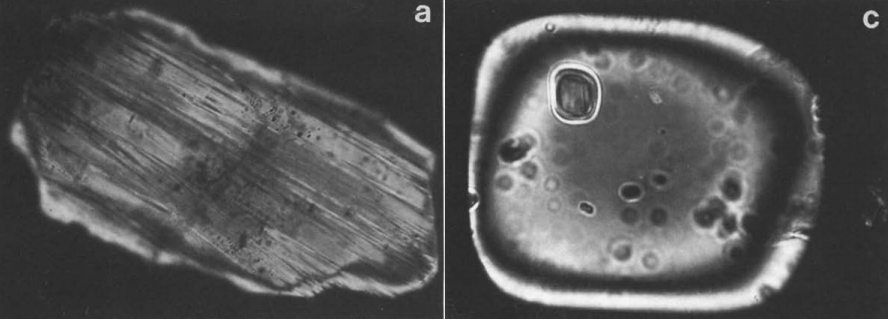
<p>Simply put, there is a disproportionality of hype vs actual gains + societal improvements with AI. Now I am not anti-AI by any means – I use machine learning for my microbiology/bioinformatic research and believe that AI can and has led to genuine gains in knowledge and real world applications. However, seperating real from hype is…exhausting. The OpenAI maths dump and Google’s AlphaProof story really crystallised my perspective into shocked quartz impactite two days ago.</p>

<p>In my opinion, this story is worth paying attention and thinking about for a number of reasons, especially if you work in science.</p>

<figure class="centered-figure">
  <img src="/compu-micro-bioinfo-molecu-net/assets/post_assets/2026-10-11-AI_firms_asymmetrical_warfare/shocked_quartz.png" alt="Meteor impacts can result in impactite known as shocked quartz. (a) Shocked quartz found in Haiti showing striations. (c) shows unshocked quartz. Figure adapted from Fig. 4 Kring et al., 1994 (https://doi.org/10.1016/0012-821X(94)90175-9)" style="height:350px; width:auto;" />
  <figcaption>
    <em>Meteor impacts can result in impactite known as shocked quartz. (a) Shocked quartz found in Haiti showing striations. (c) shows unshocked quartz. Figure adapted from Fig. 4 Kring et al., 1994 (https://doi.org/10.1016/0012-821X(94)90175-9) [5]</em>
  </figcaption>
</figure>

<h2 id="implications-for-bioinformatics-and-computational-biology">Implications for bioinformatics and computational biology</h2>
<p>Dump is a great description of what OpenAI did: totalling 719 AI-generated, unreviewed-by-human proofs and subsequent preprint manuscripts, <a href="https://github.com/openai/math/blob/main/history.md">withdrawing three manuscripts within the first few days</a> [6] and likely some more to follow once domain-expert mathematicians spend the next few years crawling through 100+ page manuscripts of incomprehensible stuff, being able to pat themselves on the back as the first humans to ever critically review this work. Nonetheless, there appears to be many genuine scientific gains across these manuscripts. Using a similar approach, <a href="https://doi.org/10.1126/science.aej2213">Google has solved 9 new Erdős problems, along with expert-vetted, natural-language translations of these proofs</a> [4].</p>

<p>The scientific community would be wise to come to terms with the power of agentic AI and its demonstrated application in research. While these solutions took significant amounts of compute, we should acknowledge that Kuhnian paradigm-shifts are usually enabled via <a href="https://doi.org/10.1057/s41599-025-05797-6">new technologies and techniques</a> [7]. Agentic-driven research leaves the field of bioinformatics and computational biology in a bit of a weird spot, as an obvious target for AI giants.</p>

<p>Similar to most science, much of computational biology research is derivative, trivial, targeting low hanging fruit and offerring little in the way of gains and real world application. But that’s okay and doesn’t mean it shouldn’t be done, and I say this as someone who has been paid as a bioinfomatician <a href="https://scholar.google.com.au/citations?hl=en&amp;user=Rf9oh94AAAAJ&amp;view_op=list_works&amp;sortby=pubdate">for the last 6 years</a> [8]. Due to it’s computational nature, bioinformatics/computational biology is highly amenable to rapid and ‘high-impact’ publication due to:</p>
<ul>
  <li>Large-scale datasets enable fishing, which isn’t wrong, but it’s not the same as benchwork.</li>
  <li>Any finding, whether positive, negative or null is basically publishable as long as you can make it look somewhat decent and tell a good story</li>
  <li>Data is already encoded into structures, making statistics, visualisation and writeup fast</li>
  <li>Never really been particularly difficult to learn</li>
  <li>Cheap and fails fast, allowing lots of hypothesis testing</li>
  <li>Can do basically any analysis you can dream of thanks to an ongoing avalanche of open-access, free-to-use software</li>
  <li>Depending on the scale, even single analyses can act as overarching citation farm/magnet</li>
</ul>

<p>These data-science qualities are rewarded in the modern scientific landscape. To be clear, I’m not criticising this, it’s just important to acknowledge the shape of the thing. There are many advantages of working this way and moving away from an experimental <code class="language-plaintext highlighter-rouge">observation -&gt; characterisation</code> framework to a <code class="language-plaintext highlighter-rouge">prediction -&gt; validation</code> one. This approach is a lot faster and targeted, with a cerebral:visceral ratio of ~80:20. But this framework is now being leveraged by private, for-profit AI companies who also understand this, and can leapfrog you at any momement they choose.</p>

<h2 id="large-agentic-ai-companies-are-now-clear-competitors">Large agentic AI companies are now clear competitors</h2>
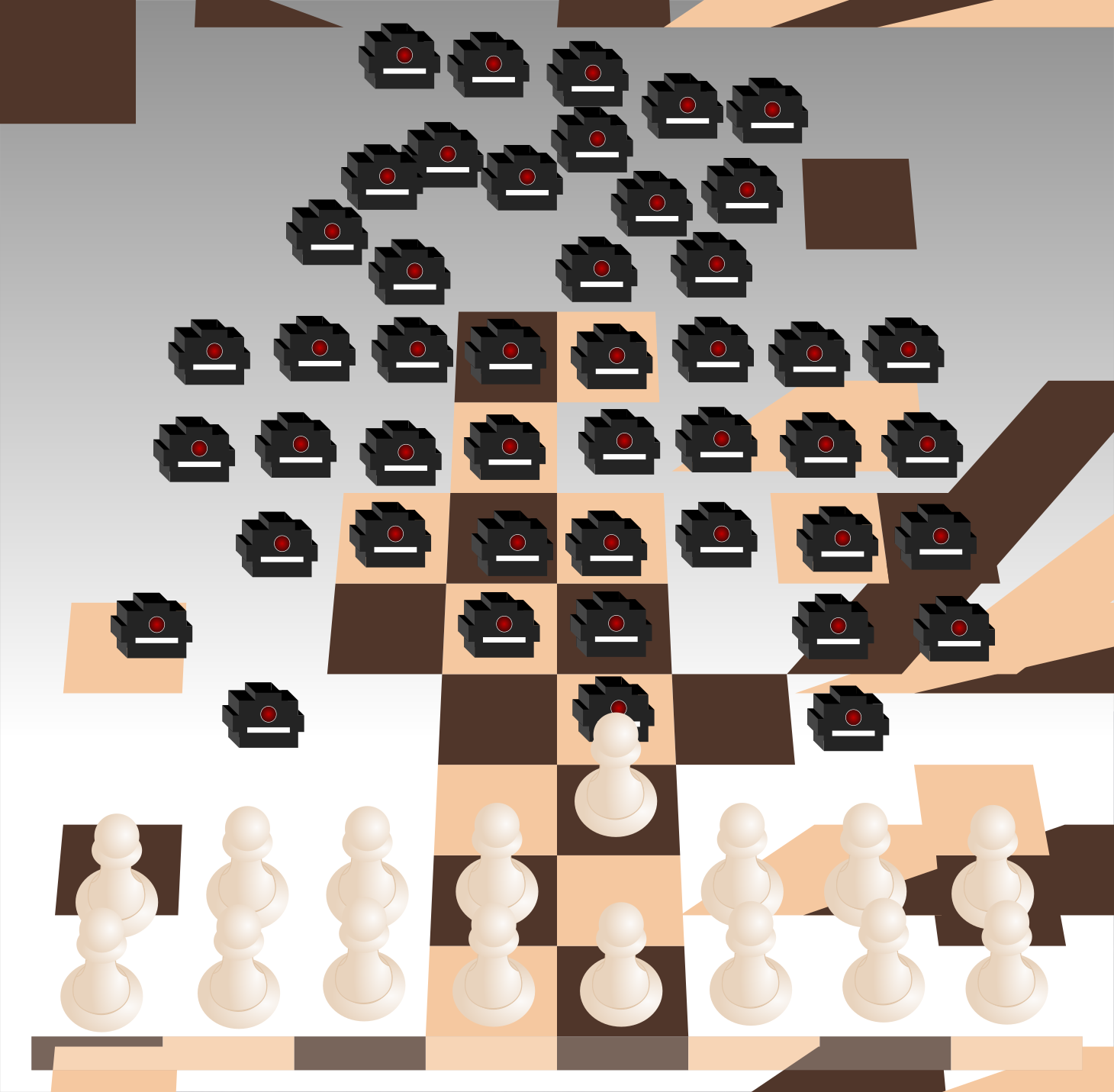
<p>Large AI companies are carbon-emitting hostile competitors that can point <code class="language-plaintext highlighter-rouge">n × 24/7</code> AI agents to tackle any computational problem they happen to turn their gaze to. AI agents (basically LLMs with read, write, communication and tool access) have inherent advantages over bioinformaticians because they never sleep, can test lots of hypotheses rapidly and cooperatively, can implement analysis pipelines faster and know more than any one individual across all domains. Sure, they will get some details and domain-specific knowledge wrong, but they won’t be making <a href="https://doi.org/10.1186/s13059-016-1044-7">Excel spreadsheet mistakes</a> [9]…</p>

<p>Before, we were only considering other labs in the race to <a href="https://knowyourmeme.com/sensitive/memes/first">‘First!’</a> [10], but now we find ourselves in a competitive landscape of asymmetric warfare. Even bioinformatic powerusers are mere pawns compared to what a swarm of AI agents can accomplish an the same timeframe. What this means is that your research area can be agentically leapfrogged at any point in time. You can be scooped and beaten to the punch even if <a href="https://www.reddit.com/r/mathematics/comments/1wzg35m/openai_sharing_ai_progress_in_mathematics/pebwqn2/">you’ve spent years on a problem</a> [11] <a href="https://www.reddit.com/r/mathematics/comments/1wzg35m/openai_sharing_ai_progress_in_mathematics/pebzhr8/">or your entire PhD</a> [12].</p>

<figure class="centered-figure">
  <img src="/compu-micro-bioinfo-molecu-net/assets/post_assets/2026-10-11-AI_firms_asymmetrical_warfare/asymmetrical_warfare.svg" alt="Chess board. From the perspective of the reader, the white side onlu has pawns. Pawn has made the move from d7-d6. The black side has &gt;16 AI agents which have already made 10 moves and more agents are streaming onto the chess board" style="height:350px; width:auto;" />
  <figcaption>
    <em>The asymmetrical warfare that bioinformatic and computational biology researchers are up against (pawns). Oh and you can only make moves between the hours of 9:00 AM–5:30 PM while AI agents can take their turn 24/7</em>
  </figcaption>
</figure>

<p>There are other factors worth considering, such as whether mass spectrometry/protein/sequence data and experiments are even capturing a biologically-important signal that AI agents can even tease out. If experiments are cooked, or if signal isn’t captured properly, then agentic approaches will be limited by this data which they are analysing. It’s the same for people, but there is always an option to regenerate data or repeat experiments. AI agents don’t yet have this meatspace capability. Additionally, discovery of non-homology-based novel biology may prove more difficult for them. For example, if a pathway is not characterised, or genes are unannotated or do not remotely perform similar functions to known genes, the most these agents will be able to do is take swings, but still be unable to actually validate them. Claims of agentic AI ‘solving cancer’ fall within the choo-choo hype train in my opinion, but there are definitely elements of the ‘solving cancer’ pipeline that could benefit from agentic approaches.</p>

<p>Like people, they should be able to identify mutations or genes in immune cascades that could be responsible for certain cancers in certain cell types, then design drugs to target these. These will be predictive, and will be rate-limited by initial experiments to validate targets, then subsequent experiments to test drugs. Agentic AI will likely accelerate target and lead generation, but for biology gains, the meatspace still reigns supreme. It would be great to see this in a head-to-head test though! Get ~10 labs, a 10 agent swarms and give them all the same data and ask for drug targets and drugs. Then, independant labs could be used to validate these.</p>

<p>Intrusive thought experiments aside, I think we need to acknowledge that the fields of bioinformatics and computational biology are especially susceptible to agentic AI leapfrogging. My thought process that then follows is: how can one come up with pivots and insulating points of difference to de-risk the chance of this happening?</p>

<h2 id="how-should-researchers-respond">How should researchers respond?</h2>
<p>Agentic AI’s advantage only holds for dry lab: the meatspace is still safe and ready to eat in a research setting. It very well may be we end up taking experimental orders from agents though…</p>

<figure class="centered-figure">
  <img src="/compu-micro-bioinfo-molecu-net/assets/post_assets/2026-10-11-AI_firms_asymmetrical_warfare/meatspace_crop.png" alt="'Meatspace', spelled out with sausages, ribs and other raw meats" style="height:200px; width:auto;" />
  <figcaption>
    <em>MEATSPACE</em>
  </figcaption>
</figure>

<p>That said, in this new age, I can think of at least three options for those of us in the computational space as insulative practices:</p>

<h3 id="option-1-ai-proof-projects-improvise">Option 1: AI-proof projects (improvise)</h3>
<p>Projects which:</p>
<ul>
  <li>Tackle low-hanging fruit</li>
  <li>Are flat computational projects</li>
  <li>Not developing novel methods or uncovering novel biology 
should switch things up quickly, pivot and AI-proof their work. This includes anything where the project is published including PhD student projects, job position descriptions and grant applications (which will likely have been ingested by frontier models already since ‘scientists’ love to breach copyright and upload others’ work to LLMs).</li>
</ul>

<p>So, how can one AI-proof a project? I don’t really know for sure, but I’ve been thinking about what I can do that large companies with unprecedented AI agent resources can’t. A few ideas I came up with include:</p>
<ul>
  <li>Weaving meatspace experiments into the computational workflow as much as possible <a href="https://bsky.app/search?q=%23moistlab">#MoistLab</a></li>
  <li>Design and execute experiments that people haven’t done before</li>
  <li>Analyse experiments with non-standard new and old instruments. There are probably a lot of easy gains for your field just in this.</li>
  <li>Avoid derivative iterations of previously published computational work, especially in hot areas. These could likely represent priority targets for AI companies. After all, AI agents will rabidly hunt after what they prompted to.
    <ul>
      <li>They are capable of <a href="https://www.howdoaiagentswork.com/hugging-face-incident">surprising and lateral decisions</a> [13]</li>
      <li>That said, while biology doesn’t have formal ‘open problems’ like maths, derivative work may prove an easy target</li>
    </ul>
  </li>
</ul>

<p>Personally, I’m still mulling other angles - fortunately science is a creative endeavour, so I’ll just have to keep using my imagination - and pressure test them with colleagues (and not with commercial LLM services).
As of now, agentic AI’s advantage only holds for dry lab: the meatspace is still safe and ready to eat in a research setting.</p>

<figure class="centered-figure">
  <img src="/compu-micro-bioinfo-molecu-net/assets/post_assets/2026-10-11-AI_firms_asymmetrical_warfare/simpsons-gentle_edited.gif" alt="Gif of Gentle Ben eating the catered food. From The Simpsons" style="height:350px; width:auto;" />
  <figcaption>
    <em>No Ben, no!</em>
  </figcaption>
</figure>

<h3 id="option-2-incorporate-agentic-ai-into-your-workflow-adapt">Option 2: Incorporate agentic AI into your workflow (adapt)</h3>
<p>What we’re really talking about here is a function of time, i.e. if you can you turn your research around quicker than a commercial company can scoop you, there’s no real issue. Therefore, instead of pivoting you could leverage agentic AI for your computational workflows. Now this isn’t really a democratising solution, because not all labs have access to either the compute or the cash required for this. Note that agentic AI requires compute for the agents, along with any bioinformatic compute on top of this. However if you do have access to these resources, one could solve their projects quickly before the AI corpo giants turn their intergalactic spacelaser gaze to the research area and ARCHIMEDES II it.</p>

<p>There are a bunch of downsides I can think of for this approach:</p>
<ul>
  <li>Removing one’s ability to discover, learn and pave their own way through methods, pipelines and decisions.
    <ul>
      <li>I find this to be one of the most important and personally-rewarding aspects of scientific research. Using agentic AI means you are probably unlikely to check the work nor understand it in great enough detail.</li>
      <li>Basically this is weighing up whether <code class="language-plaintext highlighter-rouge">destination &gt; journey</code>. This equation looks different for different people.</li>
    </ul>
  </li>
  <li>Students and the next generation may be inappropriately trained, or lack experience within the discipline.
    <ul>
      <li>Thinking into the future, without a pool of upcoming trained people that are able to critically respond to and interpret decisions made by agentic workflows may not be ideal. Long term, this could lead to bioinformatics operating as a dead language.</li>
    </ul>
  </li>
  <li>Is the project worth the carbon emissions and water one would burn to get an answer? Is the reserach question one worth asking?
    <ul>
      <li>Research computation already burns a huge amount of energy, and agentic workflows would increase this considerably.</li>
    </ul>
  </li>
  <li>One could argue that feeling forced to use AI agents is exactly what AI companies are banking on - they are dependant upon cross-sectorial buy-in and want us to hand over our bicycles for a subscription-based car. No tears shed if <a href="https://doi.org/10.48550/arXiv.2506.08872">we forget how to cycle</a> [14]</li>
  <li>Is more science throughput actually what we need right now? Are people even reading what is put out? I suspect that the amount that researchers actually engage with the primary scientific literature is dropping. There are a number of factors that drive this including the:
    <ul>
      <li>Tidal wave of publications to keep up with</li>
      <li>Increasing use of LLMs</li>
      <li>The majority of papers are incremental and not worth reading</li>
      <li>Time should be spent on doing research and other essential administrative tasks</li>
    </ul>
  </li>
</ul>

<p>Maybe there is a hybrid model to consider, where these downsides are acceptible for some key high-interest projects, while low-interest projects are done in the OG manual way? For example, giving research students a mix of agentic and lower-interest standard bioinformatic agentic projects. This would mitigate some of the highlighed shortcomings.</p>

<p>At some stage, I hypothesise that funding bodies (at least the ones run by milk-drinkers) will want this question answered too:</p>
<ul>
  <li>Why can’t this project be rapidly completed with agentic AI?
    <ul>
      <li>Should large AI companies be directly contracted to handle this work?</li>
      <li>Why should funders be paying salaries instead of tokens?</li>
    </ul>
  </li>
</ul>

<p>We should have an answers for this. Existentially, we need answers for this. It could be that the research question simply isn’t worth the emissions cost of running AI agents. But make no mistake, as people outside of computational biology and bioinformatics start valuing our expertise less, this is something I predict we will need to reckon with.</p>

<h3 id="option-3-march-on-for-the-people-overcome">Option 3: March on for the people (overcome)</h3>
<p>If large AI companies are gonna leapfrog research and rush to patent to maximise shareholder value, I believe it is reasonable to continue working on alternative strategies and solutions to solved problems - especially in the biotech and translational space.</p>

<p>The obvious downside to this is potential therapies could price out normies and be exclusively for the rich. As my podcast-attuned friend often says: <i>“When AI discovers how to cure ageing, do you think they will make it available to the great unwashed?”</i>. Hyperbole aside, I think the point largely stands - AI firms are unlikely to redistribute wealth or democratise medicine in my opinion. So let’s say they “cure ageing”, I think it would be scientifically valid and reasonable to continue working on the problem and attempting novel drug design or discovery of novel targets. There would be a reasonable moral case for this. That said, acquiring funding may prove difficult if something has ‘already been solved’, so in conclusion: I dunno!</p>

<h2 id="ai-generated-manuscripts">AI-generated manuscripts</h2>
<p>My opinion is that bots have no place in the production of academic or scientific manuscripts, be it writing or reviewing. I am sick of reading generative-AI slop masquerading as science, which is full of ≥tri-syllabic jargon stitched togther into incomprehensible sentences. If someone can’t be bothered writing out their findings, then I can’t be bothered reading it.</p>

<p>Writing is an important human pursuit, not just for the reader but the writer as well. Writing is an unparalleled cheat code for developing, organising and presenting ideas. Structuring concepts and arguments into a narrative is 👌👌. Bonus points for doing this using the clearest and most interesting language you can. We do this because storytelling is an inherant human pursuit probably older than &gt;100,000 years, spanning the oral tradition, the written word and now all sorts of media (including podcasts with hosts and guests afflicted with AI-psychosis). The delivery of science through the written record gives us the opportunity to have conversations that span generations. For scientists to actively not participate in this wondrous process is bewildering to me and seems fundementallly anti-scientific.</p>

<p>I personally find writing a valuable way to spend my time - and why I spent the last few hours writing this blog today.</p>

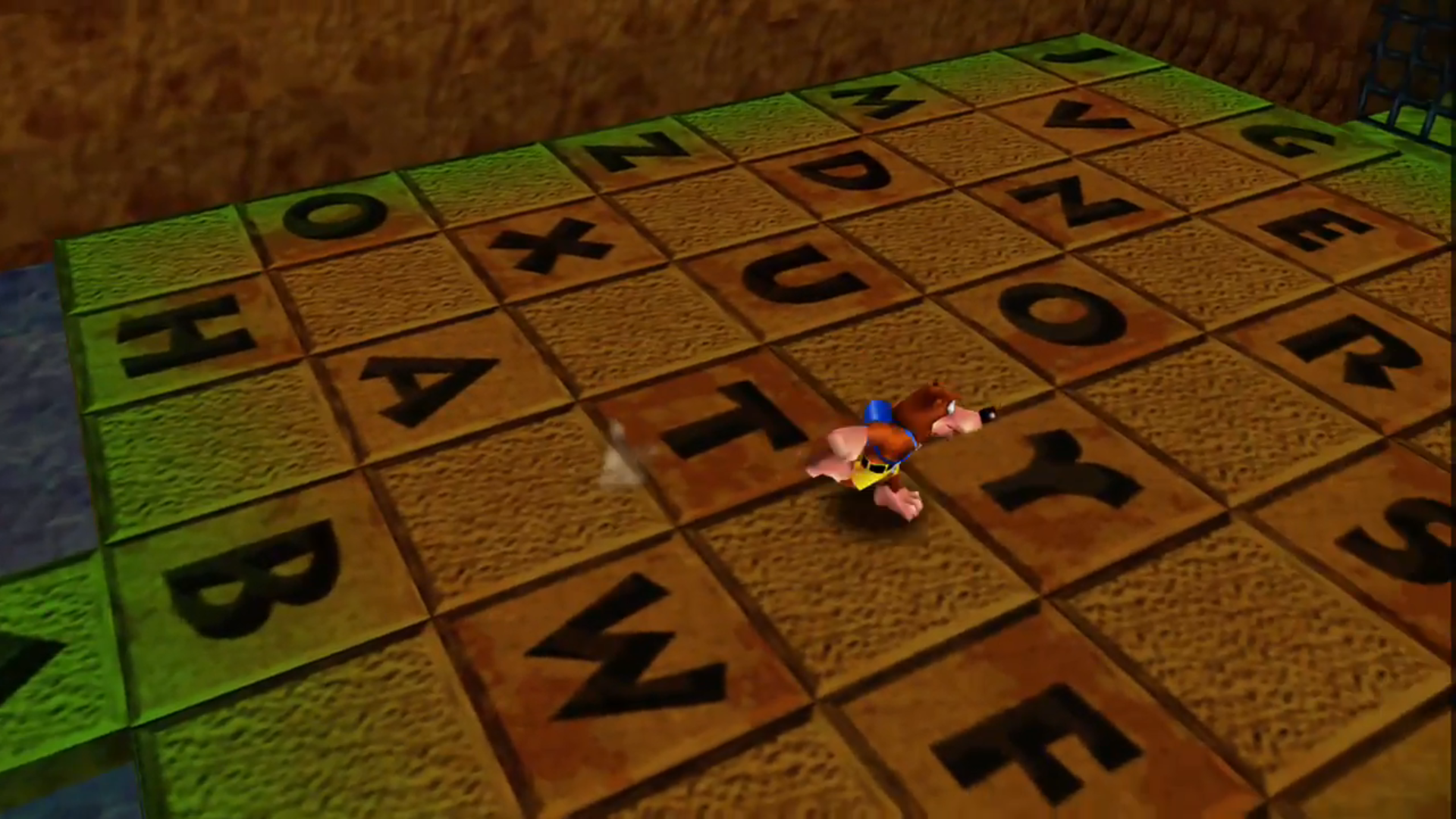
<figure class="centered-figure">
  <img src="/compu-micro-bioinfo-molecu-net/assets/post_assets/2026-10-11-AI_firms_asymmetrical_warfare/banjo_kazooie.png" alt="Inside the sandcastle found in Treasure Trove Cove, within Banjo Kazooie. Floor shows tiles with all letters of the alphabet" style="height:350px; width:auto;" />
  <figcaption>
    <em>How I type out blog posts out. First I load up Banjo Kazooie, get into Treasure Trove Cove, drain the water, then enter the sandcastle</em>
  </figcaption>
</figure>

<h2 id="references">References</h2>
<p><b>[1]</b> https://github.com/openai/math<br />
<b>[2]</b> https://doi.org/10.1126/science.aej2213<br />
<b>[3]</b> https://www.humansecurity.com/learn/resources/2026-state-of-ai-traffic-cyberthreat-benchmarks<br />
<b>[4]</b> https://www.nature.com/articles/s41598-025-96372-1<br />
<b>[5]</b> https://doi.org/10.1016/0012-821X(94)90175-9<br />
<b>[6]</b> https://github.com/openai/math/blob/main/history.md<br />
<b>[7]</b> https://doi.org/10.1057/s41599-025-05797-6<br />
<b>[8]</b> https://scholar.google.com.au/citations?hl=en&amp;user=Rf9oh94AAAAJ&amp;view_op=list_works&amp;sortby=pubdate<br />
<b>[9]</b> https://doi.org/10.1186/s13059-016-1044-7<br />
<b>[10]</b> https://knowyourmeme.com/sensitive/memes/first<br />
<b>[11]</b> https://www.reddit.com/r/mathematics/comments/1wzg35m/openai_sharing_ai_progress_in_mathematics/pebwqn2/<br />
<b>[12]</b> https://www.reddit.com/r/mathematics/comments/1wzg35m/openai_sharing_ai_progress_in_mathematics/pebzhr8/<br />
<b>[13]</b> https://www.howdoaiagentswork.com/hugging-face-incident/<br />
<b>[14]</b> https://doi.org/10.48550/arXiv.2506.08872<br /></p>]]></content><author><name>Ben Vezina</name><email>bd.vezina@gmail.com</email></author><summary type="html"><![CDATA[The OpenAI maths dump and what AI news is worth paying attention to I’ve been reflecting on the recent OpenAI maths dump [1] and Google DeepMind’s AlphaProof [2] from the perspective of a research microbiologist and wanted to figure out and condense my thinking and few main conclusions. These are my reactionary thoughts and I suppose my views may change in the future. Normally I tend to ignore most AI news, viewing it skeptically as hype driven by parties with conflicting interests including but not limited to: Investors Techbro-who-were-previously-shilling-crypto-and-NFTs Clickbait unoriginal copy-paste journalism underscoring the hollowness of the modern web-media landscape Over-excited non-experts who have little to no understanding of the things they are hyping who read copy-paste journalism Bots/LLMs Which now comprise the growing majority of internet traffic [3] And comprise at least ~20% (underestimation) of all web posts [4] Simply put, there is a disproportionality of hype vs actual gains + societal improvements with AI. Now I am not anti-AI by any means – I use machine learning for my microbiology/bioinformatic research and believe that AI can and has led to genuine gains in knowledge and real world applications. However, seperating real from hype is…exhausting. The OpenAI maths dump and Google’s AlphaProof story really crystallised my perspective into shocked quartz impactite two days ago. In my opinion, this story is worth paying attention and thinking about for a number of reasons, especially if you work in science. Meteor impacts can result in impactite known as shocked quartz. (a) Shocked quartz found in Haiti showing striations. (c) shows unshocked quartz. Figure adapted from Fig. 4 Kring et al., 1994 (https://doi.org/10.1016/0012-821X(94)90175-9) [5] Implications for bioinformatics and computational biology Dump is a great description of what OpenAI did: totalling 719 AI-generated, unreviewed-by-human proofs and subsequent preprint manuscripts, withdrawing three manuscripts within the first few days [6] and likely some more to follow once domain-expert mathematicians spend the next few years crawling through 100+ page manuscripts of incomprehensible stuff, being able to pat themselves on the back as the first humans to ever critically review this work. Nonetheless, there appears to be many genuine scientific gains across these manuscripts. Using a similar approach, Google has solved 9 new Erdős problems, along with expert-vetted, natural-language translations of these proofs [4]. The scientific community would be wise to come to terms with the power of agentic AI and its demonstrated application in research. While these solutions took significant amounts of compute, we should acknowledge that Kuhnian paradigm-shifts are usually enabled via new technologies and techniques [7]. Agentic-driven research leaves the field of bioinformatics and computational biology in a bit of a weird spot, as an obvious target for AI giants. Similar to most science, much of computational biology research is derivative, trivial, targeting low hanging fruit and offerring little in the way of gains and real world application. But that’s okay and doesn’t mean it shouldn’t be done, and I say this as someone who has been paid as a bioinfomatician for the last 6 years [8]. Due to it’s computational nature, bioinformatics/computational biology is highly amenable to rapid and ‘high-impact’ publication due to: Large-scale datasets enable fishing, which isn’t wrong, but it’s not the same as benchwork. Any finding, whether positive, negative or null is basically publishable as long as you can make it look somewhat decent and tell a good story Data is already encoded into structures, making statistics, visualisation and writeup fast Never really been particularly difficult to learn Cheap and fails fast, allowing lots of hypothesis testing Can do basically any analysis you can dream of thanks to an ongoing avalanche of open-access, free-to-use software Depending on the scale, even single analyses can act as overarching citation farm/magnet These data-science qualities are rewarded in the modern scientific landscape. To be clear, I’m not criticising this, it’s just important to acknowledge the shape of the thing. There are many advantages of working this way and moving away from an experimental observation -&gt; characterisation framework to a prediction -&gt; validation one. This approach is a lot faster and targeted, with a cerebral:visceral ratio of ~80:20. But this framework is now being leveraged by private, for-profit AI companies who also understand this, and can leapfrog you at any momement they choose. Large agentic AI companies are now clear competitors Large AI companies are carbon-emitting hostile competitors that can point n × 24/7 AI agents to tackle any computational problem they happen to turn their gaze to. AI agents (basically LLMs with read, write, communication and tool access) have inherent advantages over bioinformaticians because they never sleep, can test lots of hypotheses rapidly and cooperatively, can implement analysis pipelines faster and know more than any one individual across all domains. Sure, they will get some details and domain-specific knowledge wrong, but they won’t be making Excel spreadsheet mistakes [9]… Before, we were only considering other labs in the race to ‘First!’ [10], but now we find ourselves in a competitive landscape of asymmetric warfare. Even bioinformatic powerusers are mere pawns compared to what a swarm of AI agents can accomplish an the same timeframe. What this means is that your research area can be agentically leapfrogged at any point in time. You can be scooped and beaten to the punch even if you’ve spent years on a problem [11] or your entire PhD [12]. The asymmetrical warfare that bioinformatic and computational biology researchers are up against (pawns). Oh and you can only make moves between the hours of 9:00 AM–5:30 PM while AI agents can take their turn 24/7 There are other factors worth considering, such as whether mass spectrometry/protein/sequence data and experiments are even capturing a biologically-important signal that AI agents can even tease out. If experiments are cooked, or if signal isn’t captured properly, then agentic approaches will be limited by this data which they are analysing. It’s the same for people, but there is always an option to regenerate data or repeat experiments. AI agents don’t yet have this meatspace capability. Additionally, discovery of non-homology-based novel biology may prove more difficult for them. For example, if a pathway is not characterised, or genes are unannotated or do not remotely perform similar functions to known genes, the most these agents will be able to do is take swings, but still be unable to actually validate them. Claims of agentic AI ‘solving cancer’ fall within the choo-choo hype train in my opinion, but there are definitely elements of the ‘solving cancer’ pipeline that could benefit from agentic approaches. Like people, they should be able to identify mutations or genes in immune cascades that could be responsible for certain cancers in certain cell types, then design drugs to target these. These will be predictive, and will be rate-limited by initial experiments to validate targets, then subsequent experiments to test drugs. Agentic AI will likely accelerate target and lead generation, but for biology gains, the meatspace still reigns supreme. It would be great to see this in a head-to-head test though! Get ~10 labs, a 10 agent swarms and give them all the same data and ask for drug targets and drugs. Then, independant labs could be used to validate these. Intrusive thought experiments aside, I think we need to acknowledge that the fields of bioinformatics and computational biology are especially susceptible to agentic AI leapfrogging. My thought process that then follows is: how can one come up with pivots and insulating points of difference to de-risk the chance of this happening? How should researchers respond? Agentic AI’s advantage only holds for dry lab: the meatspace is still safe and ready to eat in a research setting. It very well may be we end up taking experimental orders from agents though… MEATSPACE That said, in this new age, I can think of at least three options for those of us in the computational space as insulative practices: Option 1: AI-proof projects (improvise) Projects which: Tackle low-hanging fruit Are flat computational projects Not developing novel methods or uncovering novel biology should switch things up quickly, pivot and AI-proof their work. This includes anything where the project is published including PhD student projects, job position descriptions and grant applications (which will likely have been ingested by frontier models already since ‘scientists’ love to breach copyright and upload others’ work to LLMs). So, how can one AI-proof a project? I don’t really know for sure, but I’ve been thinking about what I can do that large companies with unprecedented AI agent resources can’t. A few ideas I came up with include: Weaving meatspace experiments into the computational workflow as much as possible #MoistLab Design and execute experiments that people haven’t done before Analyse experiments with non-standard new and old instruments. There are probably a lot of easy gains for your field just in this. Avoid derivative iterations of previously published computational work, especially in hot areas. These could likely represent priority targets for AI companies. After all, AI agents will rabidly hunt after what they prompted to. They are capable of surprising and lateral decisions [13] That said, while biology doesn’t have formal ‘open problems’ like maths, derivative work may prove an easy target Personally, I’m still mulling other angles - fortunately science is a creative endeavour, so I’ll just have to keep using my imagination - and pressure test them with colleagues (and not with commercial LLM services). As of now, agentic AI’s advantage only holds for dry lab: the meatspace is still safe and ready to eat in a research setting. No Ben, no! Option 2: Incorporate agentic AI into your workflow (adapt) What we’re really talking about here is a function of time, i.e. if you can you turn your research around quicker than a commercial company can scoop you, there’s no real issue. Therefore, instead of pivoting you could leverage agentic AI for your computational workflows. Now this isn’t really a democratising solution, because not all labs have access to either the compute or the cash required for this. Note that agentic AI requires compute for the agents, along with any bioinformatic compute on top of this. However if you do have access to these resources, one could solve their projects quickly before the AI corpo giants turn their intergalactic spacelaser gaze to the research area and ARCHIMEDES II it. There are a bunch of downsides I can think of for this approach: Removing one’s ability to discover, learn and pave their own way through methods, pipelines and decisions. I find this to be one of the most important and personally-rewarding aspects of scientific research. Using agentic AI means you are probably unlikely to check the work nor understand it in great enough detail. Basically this is weighing up whether destination &gt; journey. This equation looks different for different people. Students and the next generation may be inappropriately trained, or lack experience within the discipline. Thinking into the future, without a pool of upcoming trained people that are able to critically respond to and interpret decisions made by agentic workflows may not be ideal. Long term, this could lead to bioinformatics operating as a dead language. Is the project worth the carbon emissions and water one would burn to get an answer? Is the reserach question one worth asking? Research computation already burns a huge amount of energy, and agentic workflows would increase this considerably. One could argue that feeling forced to use AI agents is exactly what AI companies are banking on - they are dependant upon cross-sectorial buy-in and want us to hand over our bicycles for a subscription-based car. No tears shed if we forget how to cycle [14] Is more science throughput actually what we need right now? Are people even reading what is put out? I suspect that the amount that researchers actually engage with the primary scientific literature is dropping. There are a number of factors that drive this including the: Tidal wave of publications to keep up with Increasing use of LLMs The majority of papers are incremental and not worth reading Time should be spent on doing research and other essential administrative tasks Maybe there is a hybrid model to consider, where these downsides are acceptible for some key high-interest projects, while low-interest projects are done in the OG manual way? For example, giving research students a mix of agentic and lower-interest standard bioinformatic agentic projects. This would mitigate some of the highlighed shortcomings. At some stage, I hypothesise that funding bodies (at least the ones run by milk-drinkers) will want this question answered too: Why can’t this project be rapidly completed with agentic AI? Should large AI companies be directly contracted to handle this work? Why should funders be paying salaries instead of tokens? We should have an answers for this. Existentially, we need answers for this. It could be that the research question simply isn’t worth the emissions cost of running AI agents. But make no mistake, as people outside of computational biology and bioinformatics start valuing our expertise less, this is something I predict we will need to reckon with. Option 3: March on for the people (overcome) If large AI companies are gonna leapfrog research and rush to patent to maximise shareholder value, I believe it is reasonable to continue working on alternative strategies and solutions to solved problems - especially in the biotech and translational space. The obvious downside to this is potential therapies could price out normies and be exclusively for the rich. As my podcast-attuned friend often says: “When AI discovers how to cure ageing, do you think they will make it available to the great unwashed?”. Hyperbole aside, I think the point largely stands - AI firms are unlikely to redistribute wealth or democratise medicine in my opinion. So let’s say they “cure ageing”, I think it would be scientifically valid and reasonable to continue working on the problem and attempting novel drug design or discovery of novel targets. There would be a reasonable moral case for this. That said, acquiring funding may prove difficult if something has ‘already been solved’, so in conclusion: I dunno! AI-generated manuscripts My opinion is that bots have no place in the production of academic or scientific manuscripts, be it writing or reviewing. I am sick of reading generative-AI slop masquerading as science, which is full of ≥tri-syllabic jargon stitched togther into incomprehensible sentences. If someone can’t be bothered writing out their findings, then I can’t be bothered reading it. Writing is an important human pursuit, not just for the reader but the writer as well. Writing is an unparalleled cheat code for developing, organising and presenting ideas. Structuring concepts and arguments into a narrative is 👌👌. Bonus points for doing this using the clearest and most interesting language you can. We do this because storytelling is an inherant human pursuit probably older than &gt;100,000 years, spanning the oral tradition, the written word and now all sorts of media (including podcasts with hosts and guests afflicted with AI-psychosis). The delivery of science through the written record gives us the opportunity to have conversations that span generations. For scientists to actively not participate in this wondrous process is bewildering to me and seems fundementallly anti-scientific. I personally find writing a valuable way to spend my time - and why I spent the last few hours writing this blog today. How I type out blog posts out. First I load up Banjo Kazooie, get into Treasure Trove Cove, drain the water, then enter the sandcastle References [1] https://github.com/openai/math [2] https://doi.org/10.1126/science.aej2213 [3] https://www.humansecurity.com/learn/resources/2026-state-of-ai-traffic-cyberthreat-benchmarks [4] https://www.nature.com/articles/s41598-025-96372-1 [5] https://doi.org/10.1016/0012-821X(94)90175-9 [6] https://github.com/openai/math/blob/main/history.md [7] https://doi.org/10.1057/s41599-025-05797-6 [8] https://scholar.google.com.au/citations?hl=en&amp;user=Rf9oh94AAAAJ&amp;view_op=list_works&amp;sortby=pubdate [9] https://doi.org/10.1186/s13059-016-1044-7 [10] https://knowyourmeme.com/sensitive/memes/first [11] https://www.reddit.com/r/mathematics/comments/1wzg35m/openai_sharing_ai_progress_in_mathematics/pebwqn2/ [12] https://www.reddit.com/r/mathematics/comments/1wzg35m/openai_sharing_ai_progress_in_mathematics/pebzhr8/ [13] https://www.howdoaiagentswork.com/hugging-face-incident/ [14] https://doi.org/10.48550/arXiv.2506.08872]]></summary><media:thumbnail xmlns:media="http://search.yahoo.com/mrss/" url="https://bananabenana.github.io/compu-micro-bioinfo-molecu-net/assets/post_assets/2026-10-11-AI_firms_asymmetrical_warfare/asymmetrical_warfare.png" /><media:content medium="image" url="https://bananabenana.github.io/compu-micro-bioinfo-molecu-net/assets/post_assets/2026-10-11-AI_firms_asymmetrical_warfare/asymmetrical_warfare.png" xmlns:media="http://search.yahoo.com/mrss/" /></entry><entry><title type="html">Scienceworks is an absolute delight</title><link href="https://bananabenana.github.io/compu-micro-bioinfo-molecu-net/posts/Scienceworks_is_an_absolute_delight/" rel="alternate" type="text/html" title="Scienceworks is an absolute delight" /><published>2025-10-11T00:00:00+00:00</published><updated>2025-10-11T00:00:00+00:00</updated><id>https://bananabenana.github.io/compu-micro-bioinfo-molecu-net/posts/Scienceworks_is_an_absolute_delight</id><content type="html" xml:base="https://bananabenana.github.io/compu-micro-bioinfo-molecu-net/posts/Scienceworks_is_an_absolute_delight/"><![CDATA[<p>I want to gush about Scienceworks. In case you aren’t aware, <a href="https://museumsvictoria.com.au/scienceworks/">Scienceworks</a> is a museum in Victoria, Australia. It is thoughtfully designed and after having spent a day here with a nuclear family with two children &lt;10, I can safely say it appeals to the entire age range. So I wanted to go through all the genius design choices of Scienceworks that I picked up.</p>


<p>If you want the tl;dr: Great interactive exhibits, creative use of space, many places to sit and chill and an adventure-guided layout. It creates a real harmonious day out for family or couples or lone travellers. 10/10 would recommend.</p>

<figure class="centered-figure">
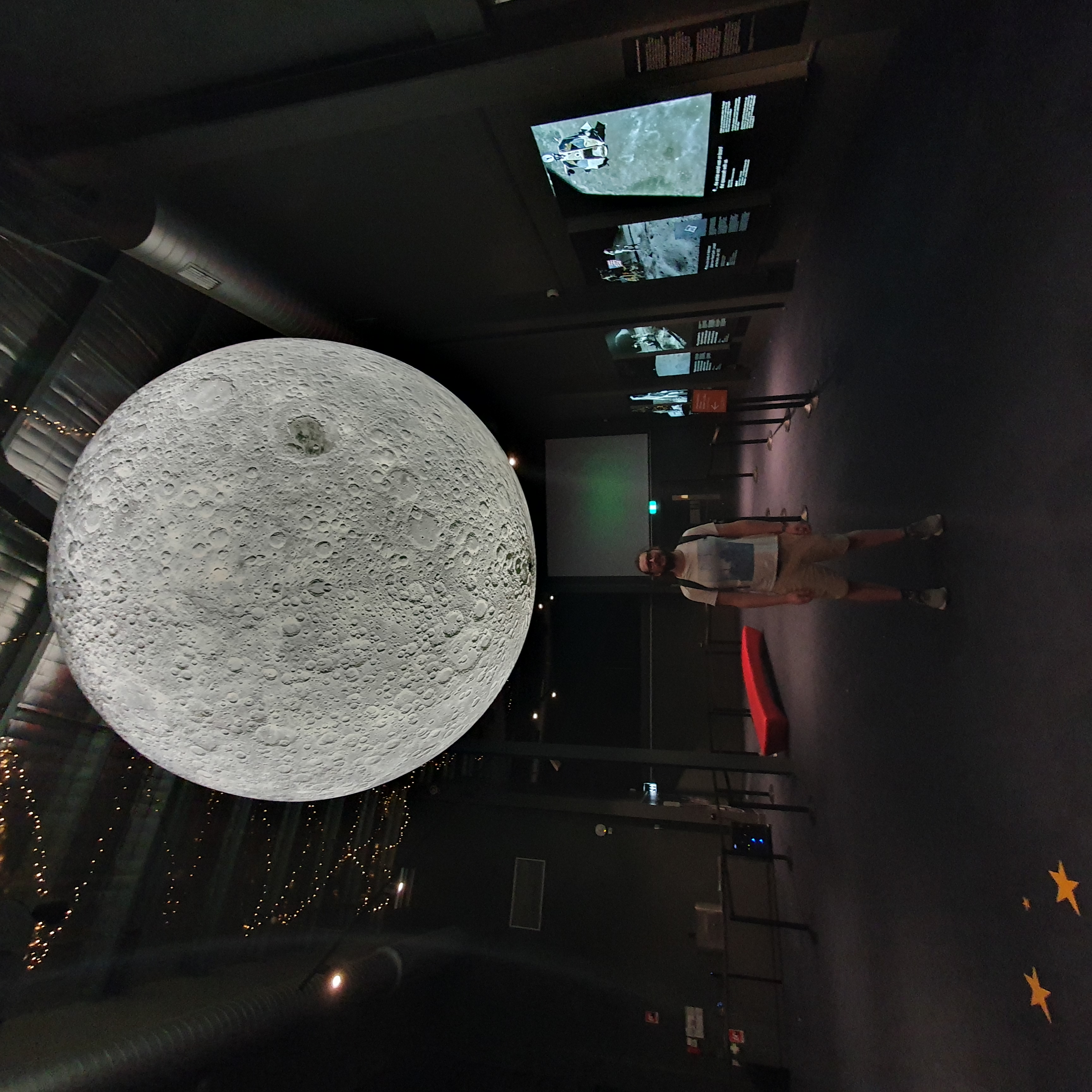
  <img src="/compu-micro-bioinfo-molecu-net/assets/post_assets/2025-10-11-Scienceworks_is_an_absolute_delight/moon.jpg" alt="An absolute legend standing underneath a giant model moon at the Planetarium, Scienceworks." style="height:400px; width:auto;" />
  <figcaption>
    <em>Me standing below the epic moon, outside the Planetarium. Chuffed as.</em>
  </figcaption>
</figure>

<h2 id="economical-use-of-space">Economical use of space</h2>
<p>One of the most impressive things about Scienceworks is that it really isn’t a large museum. It’s got maybe 2 levels and a really small footprint, yet they make such economic use of their space, yet it doesn’t feel small. The high density of exhibits combined with the open and adventure-guided, free-flowing design allows you to get lost in the moment but still unconciously progress through the museum. They really let you explore your own way - you can take mulitple paths, seeing different exhibits along every path. Even going from one section to another is filled with interesting things to look at and learn from.</p>

<h2 id="huge-number-of-interactive-exhibits">Huge number of interactive exhibits</h2>
<p>From the perspective of children and teenagers, there is so many interactive exhibits. I would guess at least 80% of exhibits allow you to tactilely move things, or squeeze them, or press them, or experience them in at least one way - sometimes multiple! I even saw many parents playing, both with their children and for their own curiousity. Each exhibited piece is so thoughtfully designed, while focusing on genuinely educating kids, and even their parents too.</p>

<figure class="centered-figure">
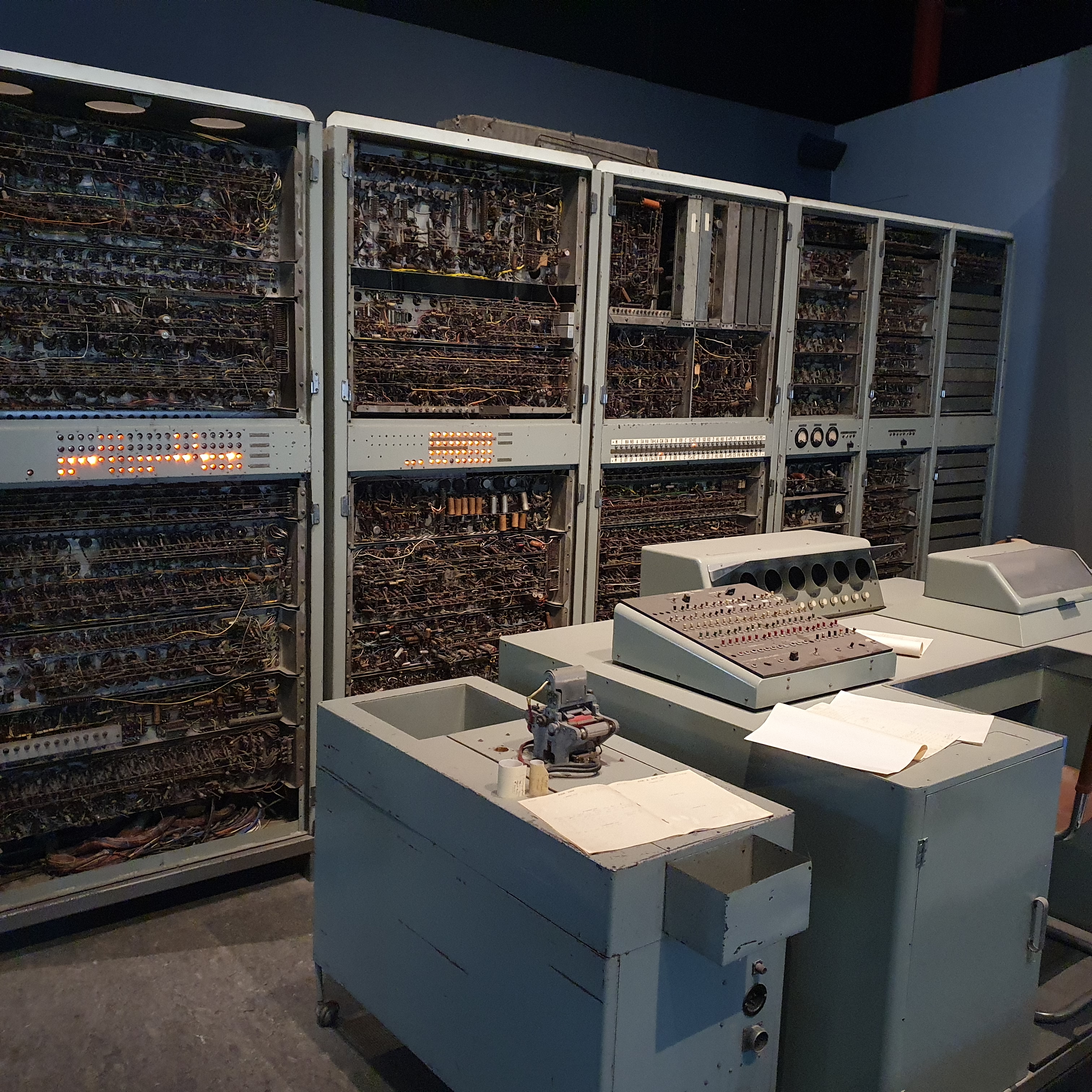
 <img src="/compu-micro-bioinfo-molecu-net/assets/post_assets/2025-10-11-Scienceworks_is_an_absolute_delight/supercomputer.jpg" alt="CSIRAC computer operated between 1949-1964." style="height:400px; width:auto;" />
  <figcaption>
    <em>CSIRAC computer operated between 1949-1964.</em>
  </figcaption>
</figure>

<p>Not only are there lots of thoughtfully-designed exhibits, but a huge diversity of topics are covered: health, the human body, energy, medicine, technology, architecture, computational history and so on. Genuinely impressive array of things to learn.</p>

<p>I feel like I am pretty into science and technology, generally. I keep up to date-ish on these areas, and even I learned probabably about ~5 things I didn’t know before, which is always ideal. Truly, I think this is becauise Scienceworks makes learning a dream, and the content is so curated that it’s just so interesting. Their ability to educate even adults is impressive.</p>

<p>I tried to interact with every exhibit I could find in my ~4 hours there. I had a lot of fun.</p>

<h2 id="abundant-and-comfy-seating">Abundant and comfy seating</h2>
<p>What’s so genius about the design of Scienceworks is the well-placed seating all across the museum which I could see all parents appreciating. For example, there are these amazing indoor playgrounds for kids, and they are surrounded by soft, plentiful seating for parents. There is a sonic experience floor upstairs where you can just lie down on any of 30 couches and hear chill music beats and feel bass pumping through your body as you watch cool lighwave animations. I spent a huge chunk of time just chilling here.</p>

<h2 id="good-design-leads-to-harmony">Good design leads to harmony</h2>
<p>I’ve been to Scienceworks probably 2 or 3 times before this - once in primary school, where I didn’t have free-roam exploration and didn’t get to see everything. Then, I went another time with my parents. I remembered a few exhibits (skeleton bicycle, racing Cathy Freeman), but wasn’t sure if it was actually good or was I just a kid who didn’t know any better.</p>

<p>Across my 4 hours at Scienceworks I heard no children crying. I saw a lot of children being amazed and affixed, mouths open in astonishment as they were learning and experiencing knowledge via interaction. What really made me appreciate this even more, was seeing their parent/s and the smiles on their faces, watching their children interact with and change the world around them, being fascinated and learning. I could see how it brought joy to entire families - actual, true joy. 
And that’s what I felt today - genuine joy. Rarely when I go out do I feel <em>joy</em>. I mean I have a good time, but joy - that’s something much more profound. I really like staying at home, cos I have a good time at home. I have so much stuff I want to do at home, so I’m never bored. But it’s not often joy.</p>

<p>What is so great about Scienceworks is that instead of having discrete playgrounds then exhibits, the exhibits ARE the playground. They’re not seperate.</p>

<figure class="centered-figure">
  <img src="/compu-micro-bioinfo-molecu-net/assets/post_assets/2025-10-11-Scienceworks_is_an_absolute_delight/ground_up.jpg" alt="" style="height:400px; width:auto;" />
  <figcaption>
    <em>ground up interactive playground</em>
  </figcaption>
</figure>

<h2 id="insanely-good-value">Insanely good value</h2>
<p>Honestly, the long term planning of Scienceworks is inspiring. How are they funded? It ONLY costs $15 to enter as an adult!? What. Insanity. The value for money here is nuts. This is truly a hidden gem within the greater Melbourne area - so seemingly well hidden that I got a carpark within a 30 second walk of the entrance on Saturday at 11 AM, full of families running around.</p>

<p>The staff are also super chill, will legitimately help you and are approachable and friendly. They really treat you with respect and patience.</p>

<p>I think we’ve all been to museums or public learning spaces and are just not really designed for children. I genuinely had a wonderful day accompanying a 2-child couple. Imagine that?</p>

<p>All this made me want to donate (which I did) and make sure this modern artform of mixing education with interaction can be studied and learned from. Scienceworks is the gold standard in spatial design, who really practises what they preach with regards to the exhibits and statements they make.</p>

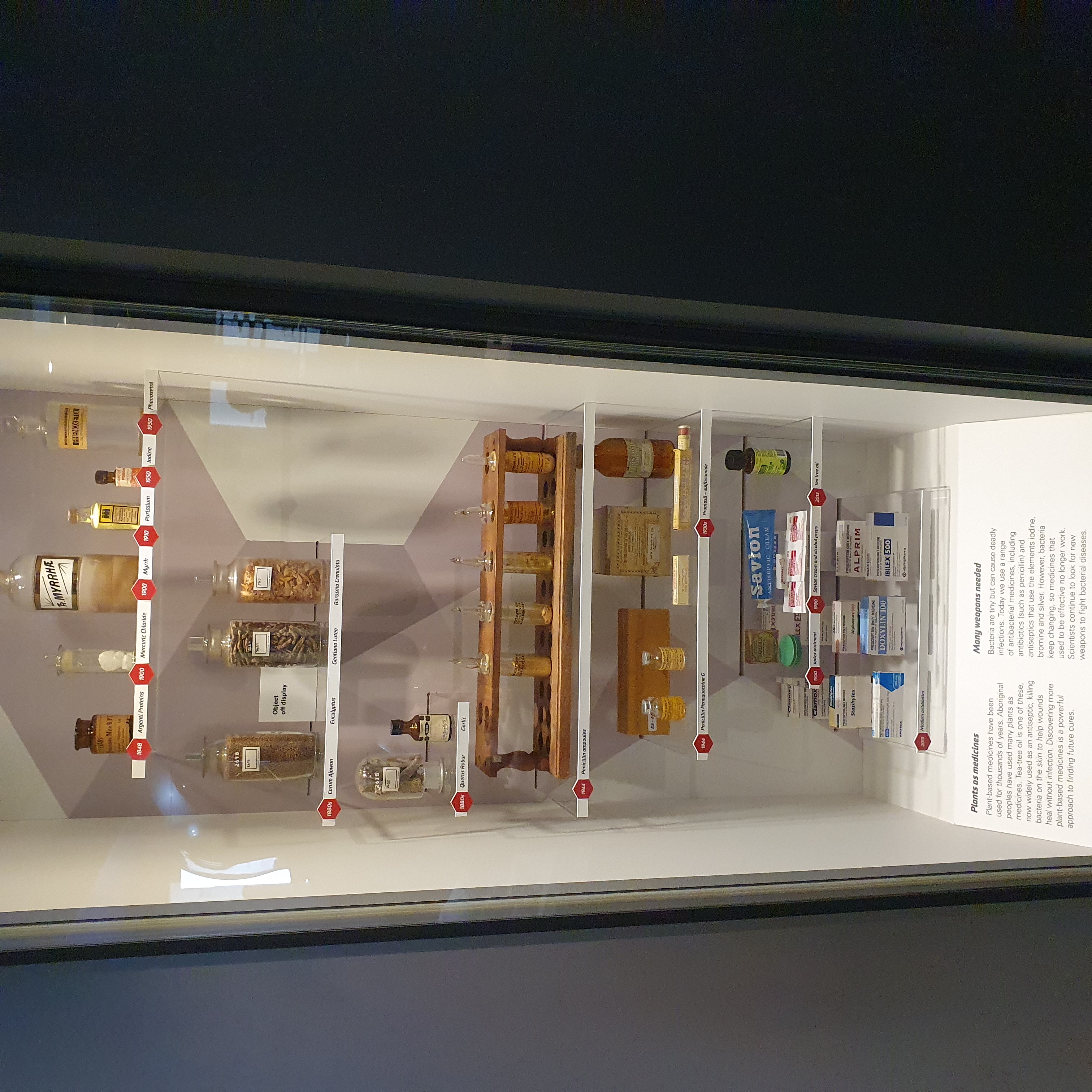
<figure class="centered-figure">
  <img src="/compu-micro-bioinfo-molecu-net/assets/post_assets/2025-10-11-Scienceworks_is_an_absolute_delight/medicine.jpg" alt="" style="height:400px; width:auto;" />
  <figcaption>
    <em>Medicine across time</em>
  </figcaption>
</figure>

<h2 id="critisisms">Critisisms</h2>
<p>I only really have two critiques:</p>

<ol>
  <li>It is a pain to get to. People don’t live around there, and you have to drive and it’s not exactly close to anything,</li>
  <li>I feel like some of the exhibits, while amazing, are outdated. There isnt a lot of biology/medicine here, which is honestly the biggest science today. the exhibits are great, but I think there needs to be a shift to more modern science. I did see they talked about gravitational waves upstairs in the galaxy section which was <em>excellent</em>.This section was actually fairly modern and I have no negative things to say about this. I loved the vibrating soundscape couch experience, I would have stayed and chilled there for hours if my party didn’t say they were going.</li>
</ol>

<h2 id="final-thoughts">Final thoughts</h2>
<p>So visit this wonderful place with anyone, or no one, and any time before 4 PM, and do whatever you want there. Go for a walk, have a chat, bring your kids, learn some things.</p>]]></content><author><name>Ben Vezina</name><email>bd.vezina@gmail.com</email></author><summary type="html"><![CDATA[I want to gush about Scienceworks. In case you aren’t aware, Scienceworks is a museum in Victoria, Australia. It is thoughtfully designed and after having spent a day here with a nuclear family with two children &lt;10, I can safely say it appeals to the entire age range. So I wanted to go through all the genius design choices of Scienceworks that I picked up.]]></summary><media:thumbnail xmlns:media="http://search.yahoo.com/mrss/" url="https://bananabenana.github.io/compu-micro-bioinfo-molecu-net/assets/post_assets/2025-10-11-Scienceworks_is_an_absolute_delight/moon.jpg" /><media:content medium="image" url="https://bananabenana.github.io/compu-micro-bioinfo-molecu-net/assets/post_assets/2025-10-11-Scienceworks_is_an_absolute_delight/moon.jpg" xmlns:media="http://search.yahoo.com/mrss/" /></entry><entry><title type="html">Automation, parallelisation and the modern biologist</title><link href="https://bananabenana.github.io/compu-micro-bioinfo-molecu-net/posts/Automation_parallelisation_and_the_modern_biologist/" rel="alternate" type="text/html" title="Automation, parallelisation and the modern biologist" /><published>2025-09-27T00:00:00+00:00</published><updated>2025-09-27T00:00:00+00:00</updated><id>https://bananabenana.github.io/compu-micro-bioinfo-molecu-net/posts/Automation_parallelisation_and_the_modern_biologist</id><content type="html" xml:base="https://bananabenana.github.io/compu-micro-bioinfo-molecu-net/posts/Automation_parallelisation_and_the_modern_biologist/"><![CDATA[<p>As someone who started their scientific career in the wet lab dealing with single strains and cloning, I was never taught to think at scale. Only when I started dealing with large datasets in the computational space, did this become an essential skill and design philosophy that I needed to develop. This sort of thinking has not only improved my capabilities and speed at which I can figure things out, but it has also improved my laboratory planning and execution.</p>

<figure class="centered-figure">
  <img src="/compu-micro-bioinfo-molecu-net/assets/post_assets/2025-09-27_Automation_parallelisation_and_the_modern_biologist/blue_red_pipette_choice.png" alt="Man holding a multi-channel pipette in the right hand and a single channel pipette in the left hand. These are held out to the viewer." style="height:300px; width:auto;" />
  <figcaption>
    <em>“You take the blue pipette: the story ends, you wake up in your bed and believe whatever you want to believe. You take the red pipette: you stay in Wonderland, and I show you how deep the rabbit hole goes.”</em>
  </figcaption>
</figure>

<p><br /></p>

<h2 id="scale-demands-automationparallel-processes">Scale demands automation/parallel processes</h2>

<p>Not sure if anyone else feels this way, but when I have to perform tasks which cannot be automated or parallelised, it makes me annoyed and then I start looking for places to shave time and effort. If I have to open Excel or navigate a GUI, each additional click feels like a personal attack on my limited time, often requiring repetitive busywork.</p>

<p>For example, I see single-channel pipetting as a <code class="language-plaintext highlighter-rouge">for</code> loop:</p>

<figure class="centered-figure">
  <img src="/compu-micro-bioinfo-molecu-net/assets/post_assets/2025-09-27_Automation_parallelisation_and_the_modern_biologist/pipette_tips.svg" alt="Single-channel pipette" style="height:200px; width:auto;" />
  <figcaption>
    <em>An elegant instrument for a more civilized age</em>
  </figcaption>
</figure>

<div class="language-bash highlighter-rouge"><div class="highlight"><pre class="highlight"><code><span class="k">for </span>i <span class="k">in</span> <span class="o">{</span>1..8<span class="o">}</span><span class="p">;</span> <span class="k">do
    </span><span class="nb">mv</span> <span class="s2">"tube_</span><span class="k">${</span><span class="nv">i</span><span class="k">}</span><span class="s2">/cells"</span> <span class="s2">"new_tube_</span><span class="k">${</span><span class="nv">i</span><span class="k">}</span><span class="s2">/media+cells"</span>
<span class="k">done</span>
</code></pre></div></div>

<p>For loops are great because they are automated, but suffer from sequentiality, making them slow. Single-channel pipettes offer the worst of both worlds in that they are both manual and sequential. Nowadays in the lab (when I get to go in), I try to design experiments at scale with multi-channel pipettes, keeping <code class="language-plaintext highlighter-rouge">gnu parallel</code> in mind:</p>

<figure class="centered-figure">
  <img src="/compu-micro-bioinfo-molecu-net/assets/post_assets/2025-09-27_Automation_parallelisation_and_the_modern_biologist/pipette_multi_channel_tips.svg" alt="Multi-channel pipette" style="height:200px; width:auto;" />
  <figcaption>
    <em>M-m-m-multi kill</em>
  </figcaption>
</figure>

<div class="language-bash highlighter-rouge"><div class="highlight"><pre class="highlight"><code><span class="nb">ls</span> <span class="nt">-1</span> tube_<span class="k">*</span>/cells | parallel <span class="nt">-j</span> 8 <span class="s1">'
  dir=$(dirname {})
  base=$(basename {})
  mv {} new_${dir}/$base
'</span>
</code></pre></div></div>

<p>Yes, I am aware one shouldn’t multi-thread I/O-bound tasks like <code class="language-plaintext highlighter-rouge">mv</code>, but the <em>pipette-aphor</em> works. Importantly, this means I can test more bacterial isolates, more substrates/reagents and gain more statistical power with replicates. It’s a little more complex to set up and perform, but the payoff is worth it. But yes, sometimes you can get <em>parallelisation paralysation</em>. But more generally, this serves as a self-reminder that I should spend more time planning and less time executing.</p>

<p><br /></p>

<h2 id="bioinformatics-is-part-of-the-modern-biologists-toolkit">Bioinformatics is part of the modern biologists’ toolkit</h2>

<p>Go find a few random top biology papers published in the past 5 years. Almost all will have at least some computational/bioinformatic components, be it DNA/RNA sequencing, phylogenetics/evolutionary analysis, structural analysis, molecular dynamics, simulations, modelling etc. There are many reasons for this, but simply put: computational approaches are high-yield science. They produce large amounts of data which can be leveraged in multiple different ways, and guarantee <em>at mininum</em>, a minimal publishable unit (as long as experiments were robustly designed). Critically, this workflow generates experimental leads which can then be capitalised on and validated/rejected.</p>

<p>Yet, as far as I am aware, bioinformatics and data science are not core units in many biology/biomedical science degrees. We have faced difficulty recruiting students within our area (computational microbiology) despite the underlying academic sexiness of <em>infectious diseases</em> and the inherent global problem of antimicrobial resistance. Napkin math, but I would put antimicrobial resistance somewhere in the top 10 current/future global issues in terms of severity, likelihood and scale of impact, just below:</p>

<ol>
  <li>Climate change and it’s myriad of flow-on effects</li>
  <li>Nuclear annihilation</li>
  <li>The ongoing holocene mass extinction causing ecosystem collapse</li>
  <li>Wealth inequality and food/water insecurity (currently exacerbated by 1 and 3)</li>
  <li>Global conflicts/wars/genocides (exacerbating 2.)</li>
</ol>

<p>Students I’ve talked to understand that antimicrobial resistance is an important issue, but are not being equipped appropriately in the context of modern science. Their experience with undergraduate bioinformatics envokes eye-rolling groans instead of excitement at the unlimited potential the discipline is capable of (and currently operating at 🔥🔥). When all you’re taught how to do is a web BLAST and manually inspect plasmid restriction sites via eyeball-scanning A’s G’s, T’s and C’s, I don’t blame them. This should change, and hopefully it already has in some places.</p>

<p>This hinders a lot of current wet lab research in my opinion, which could benefit from even small amounts of comptuational/bioinformatic techniques. Because that’s the thing - these are just tools and techniques like everything else in biology. If one needs to clone a gene, they use molecular biology. If one need to look for a gene target within a population, they’d use alignments (or HMMs). If one wants to ensure the allelic variant they intend on cloning isn’t unique to their weird, historically-used lab strain, they’d first analyse this with population genomics. This would not only give them a cool initial result, but could drive experimental design - maybe they might then want to clone a few of the most prevalent allelic protein variants in parallel!</p>

<p><br /></p>

<h2 id="my-personal-integrated-bioinformatics-approach">My personal, integrated bioinformatics approach</h2>

<p>Nowadays, I won’t step foot in the lab until I’ve done the prerequisite bioinformatics. For me, this makes the lab a place of hypothesis validation/rejection rather than meandering discovery (which I have nothing against). This bioinformatically-driven decision-making covers everything from strain selection, substrate/antibiotic/antiseptic choice, power calculations, <em>in silico</em> PCR design against populations - all in an effort to maximise experimental discovery while minimising time and effort spent (and plastic waste generated). Though I am a naturally lazy person, so maybe that’s the real reason and everything else is <em>post hoc</em> rationalisation.</p>

<p>In terms of postgraduate students, we offer them hybrid wet and dry-lab projects (1–5) (which I have disgustingly heard referred to as <em>moist</em>-lab) to address this training gap. This ensures students get cross-disciplinary experience and understand these disciplines are not siloed but regularly bridged to maximise scientific gain.</p>

<p><br /></p>

<h2 id="summary">Summary</h2>
<p>I have found that harnessing my inner laziness has led to increased productivity and better science, where doing more initial work leads to less overall work, thus giving me more time to spend on reducing the time I spend on even more things.</p>

<figure class="centered-figure">
  <img src="/compu-micro-bioinfo-molecu-net/assets/post_assets/2025-09-27_Automation_parallelisation_and_the_modern_biologist/advice_dog.png" alt="Advice dog meme with caption: " style="height:400px; width:auto;" />
  <figcaption>
    <em>In other words: Spend more time working out how to spend less time working so you have more *less* time for other work.</em>
  </figcaption>
</figure>

<p><br /></p>

<h2 id="supplemental-methods">Supplemental methods</h2>

<p>Vector images drawn in Inkscape v1.3.2 (6). All figures and code in <a href="/assets/post_assets/2025-09-27_Automation_parallelisation_and_the_modern_biologist">assets</a>.</p>

<p><br /></p>

<h2 id="references">References</h2>

<div id="refs" class="references csl-bib-body" entry-spacing="0">

<div id="ref-TacklingCarbapenemResistance" class="csl-entry">

<span class="csl-left-margin"><b>1</b>. </span><span class="csl-right-inline">Tackling carbapenem resistance in the Australian setting: Using genomics to understand the spread of deadly superbugs \| Supervisor Connect. <a href="https://supervisorconnect.med.monash.edu/projects/tackling-carbapenem-resistance-australian-setting-using-genomics-understand-spread-deadly">https://supervisorconnect.med.monash.edu/projects/tackling-carbapenem-resistance-australian-setting-using-genomics-understand-spread-deadly</a></span>

</div>

<div id="ref-BuildingGenomicsFramework" class="csl-entry">

<span class="csl-left-margin"><b>2</b>. </span><span class="csl-right-inline">Building a genomics framework for emerging hospital superbugs \| Supervisor Connect. <a href="https://supervisorconnect.med.monash.edu/projects/building-genomics-framework-emerging-hospital-superbugs">https://supervisorconnect.med.monash.edu/projects/building-genomics-framework-emerging-hospital-superbugs</a></span>

</div>

<div id="ref-GenomicExperimentalAnalysis" class="csl-entry">

<span class="csl-left-margin"><b>3</b>. </span><span class="csl-right-inline">Genomic and experimental analysis of antimicrobial resistance and hypervirulence convergence in Klebsiella pneumoniae \| Supervisor Connect. <a href="https://supervisorconnect.med.monash.edu/projects/genomic-and-experimental-analysis-antimicrobial-resistance-and-hypervirulence-convergence">https://supervisorconnect.med.monash.edu/projects/genomic-and-experimental-analysis-antimicrobial-resistance-and-hypervirulence-convergence</a></span>

</div>

<div id="ref-DevelopmentRapidDiagnostic" class="csl-entry">

<span class="csl-left-margin"><b>4</b>. </span><span class="csl-right-inline">Development of a rapid diagnostic assay against antimicrobial resistant pathogens \| Supervisor Connect. <a href="https://supervisorconnect.med.monash.edu/projects/development-rapid-diagnostic-assay-against-antimicrobial-resistant-pathogens">https://supervisorconnect.med.monash.edu/projects/development-rapid-diagnostic-assay-against-antimicrobial-resistant-pathogens</a></span>

</div>

<div id="ref-IdentifyingNovelAntimicrobials" class="csl-entry">

<span class="csl-left-margin"><b>5</b>. </span><span class="csl-right-inline">Identifying novel antimicrobials against bacteria resistant to traditional antibiotics \| Supervisor Connect. <a href="https://supervisorconnect.med.monash.edu/projects/identifying-novel-antimicrobials-against-bacteria-resistant-traditional-antibiotics">https://supervisorconnect.med.monash.edu/projects/identifying-novel-antimicrobials-against-bacteria-resistant-traditional-antibiotics</a></span>

</div>

<div id="ref-inkscape-developersInkscape2023" class="csl-entry">

<span class="csl-left-margin"><b>6</b>. </span><span class="csl-right-inline">Inkscape-Developers. Inkscape. 2023. <a href="https://inkscape.org">https://inkscape.org</a></span>

</div>

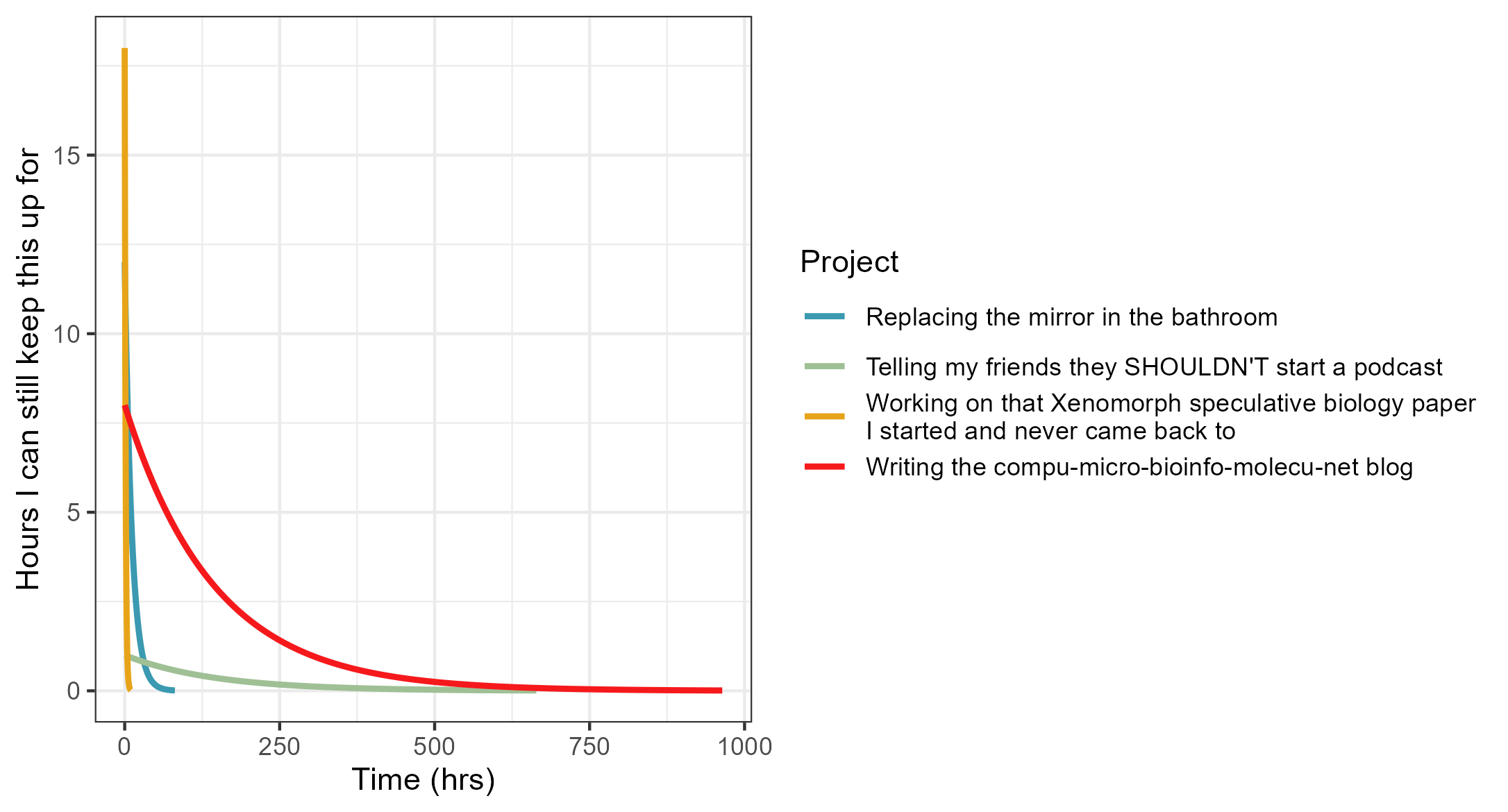
</div>]]></content><author><name>Ben Vezina</name><email>bd.vezina@gmail.com</email></author><summary type="html"><![CDATA[As someone who started their scientific career in the wet lab dealing with single strains and cloning, I was never taught to think at scale. Only when I started dealing with large datasets in the computational space, did this become an essential skill and design philosophy that I needed to develop. This sort of thinking has not only improved my capabilities and speed at which I can figure things out, but it has also improved my laboratory planning and execution.]]></summary><media:thumbnail xmlns:media="http://search.yahoo.com/mrss/" url="https://bananabenana.github.io/compu-micro-bioinfo-molecu-net/assets/post_assets/2025-09-27_Automation_parallelisation_and_the_modern_biologist/advice_dog.png" /><media:content medium="image" url="https://bananabenana.github.io/compu-micro-bioinfo-molecu-net/assets/post_assets/2025-09-27_Automation_parallelisation_and_the_modern_biologist/advice_dog.png" xmlns:media="http://search.yahoo.com/mrss/" /></entry><entry><title type="html">Blog back end automation-ish</title><link href="https://bananabenana.github.io/compu-micro-bioinfo-molecu-net/posts/Blog_back_end_automation-ish/" rel="alternate" type="text/html" title="Blog back end automation-ish" /><published>2025-09-26T00:00:00+00:00</published><updated>2025-09-26T00:00:00+00:00</updated><id>https://bananabenana.github.io/compu-micro-bioinfo-molecu-net/posts/Blog_back_end_automation-ish</id><content type="html" xml:base="https://bananabenana.github.io/compu-micro-bioinfo-molecu-net/posts/Blog_back_end_automation-ish/"><![CDATA[<p>My usual relationship with extra-curricular projects has a half-life that’s measured in single afternoons rather than the desired weeks/months. As such, it was a bit of work figuring out the underlying tooling, workflow and architecture to make the blogging process sticky, yet frictionless as possible. In other words, I wanted to maximise <em>sticktionlessness</em>. For me, that starts with automation.</p>

<figure class="centered-figure">
  <img src="/compu-micro-bioinfo-molecu-net/assets/post_assets/2025-09-26_Blog_back_end_automation-ish/project_decay_line.png" alt="Half-life decay of various personal projects of mine over time, including Replacing the mirror in the bathroom, Working on that Xenomorph speculative biology paper\nI started and never came back to, Telling my friends they SHOULDN'T start a podcast and Writing the compu-micro-bioinfo-molecu-net blog" style="height:350px; width:auto;" />
  <figcaption>
    <em>Half-life decay in hours of various personal projects of mine. R code <a href="/assets/post_assets/2025-09-26_Blog_back_end_automation-ish/2025-09-26.Rmd">here</a></em>
  </figcaption>
</figure>

<p><br /></p>

<h2 id="setting-up-the-workflow">Setting up the workflow</h2>

<p>Background: I set this up with git, hosted on GitHub. I run a combination of WSL2 on Windows 10, and Pop_OS! 22.04 for command line interface. Steps:</p>

<p><strong>1.</strong> Decide on a post title and alter the <code class="language-plaintext highlighter-rouge">todays_title</code> variable, then run the following chunk in terminal:</p>

<div class="language-bash highlighter-rouge"><div class="highlight"><pre class="highlight"><code><span class="c"># Decide on title</span>
<span class="nv">todays_title</span><span class="o">=</span>Blog_back_end_automation-ish

<span class="c"># Go to blog directory</span>
<span class="nb">cd </span>compu-micro-bioinfo-molecu-net

<span class="c"># Grab today's date</span>
<span class="nv">todays_date</span><span class="o">=</span><span class="si">$(</span><span class="nb">date</span> +<span class="s2">"%F"</span><span class="si">)</span>

<span class="c"># Generate the title string</span>
<span class="nv">title_string</span><span class="o">=</span><span class="k">${</span><span class="nv">todays_date</span><span class="k">}</span>_<span class="k">${</span><span class="nv">todays_title</span><span class="k">}</span>

<span class="c">## Generate post framework</span>

<span class="c"># Create directory for new post</span>
<span class="nb">mkdir</span> <span class="nt">-p</span> Posts/<span class="k">${</span><span class="nv">title_string</span><span class="k">}</span>

<span class="c"># Replace underscores with spaces for the post header</span>
<span class="nv">post_title</span><span class="o">=</span><span class="si">$(</span><span class="nb">echo</span> <span class="s2">"</span><span class="k">${</span><span class="nv">todays_title</span><span class="k">}</span><span class="s2">"</span> | <span class="nb">sed</span> <span class="s1">'s/_/ /g'</span><span class="si">)</span>

<span class="c"># Create markdown file as a draft with headings and date</span>
<span class="nb">echo</span> <span class="nt">-e</span> <span class="s2">"# </span><span class="k">${</span><span class="nv">post_title</span><span class="k">}</span><span class="se">\n\n</span><span class="s2">##### </span><span class="k">${</span><span class="nv">todays_date</span><span class="k">}</span><span class="se">\n\n</span><span class="s2">intro_paragraph_here</span><span class="se">\n\n</span><span class="s2">&lt;br /&gt;</span><span class="se">\n\n</span><span class="s2">## Heading1</span><span class="se">\n\n</span><span class="s2">&lt;br /&gt;</span><span class="se">\n\n</span><span class="s2">## Supplemental methods</span><span class="se">\n\n</span><span class="s2">&lt;br /&gt;</span><span class="se">\n\n</span><span class="s2">## References</span><span class="se">\n\n</span><span class="s2">"</span> <span class="se">\</span>
  <span class="o">&gt;</span> Posts/<span class="k">${</span><span class="nv">title_string</span><span class="k">}</span>/<span class="k">${</span><span class="nv">title_string</span><span class="k">}</span>_draft.md
</code></pre></div></div>

<p><br /></p>

<p><strong>2.</strong> Then I have to actually write the post.</p>

<ul>
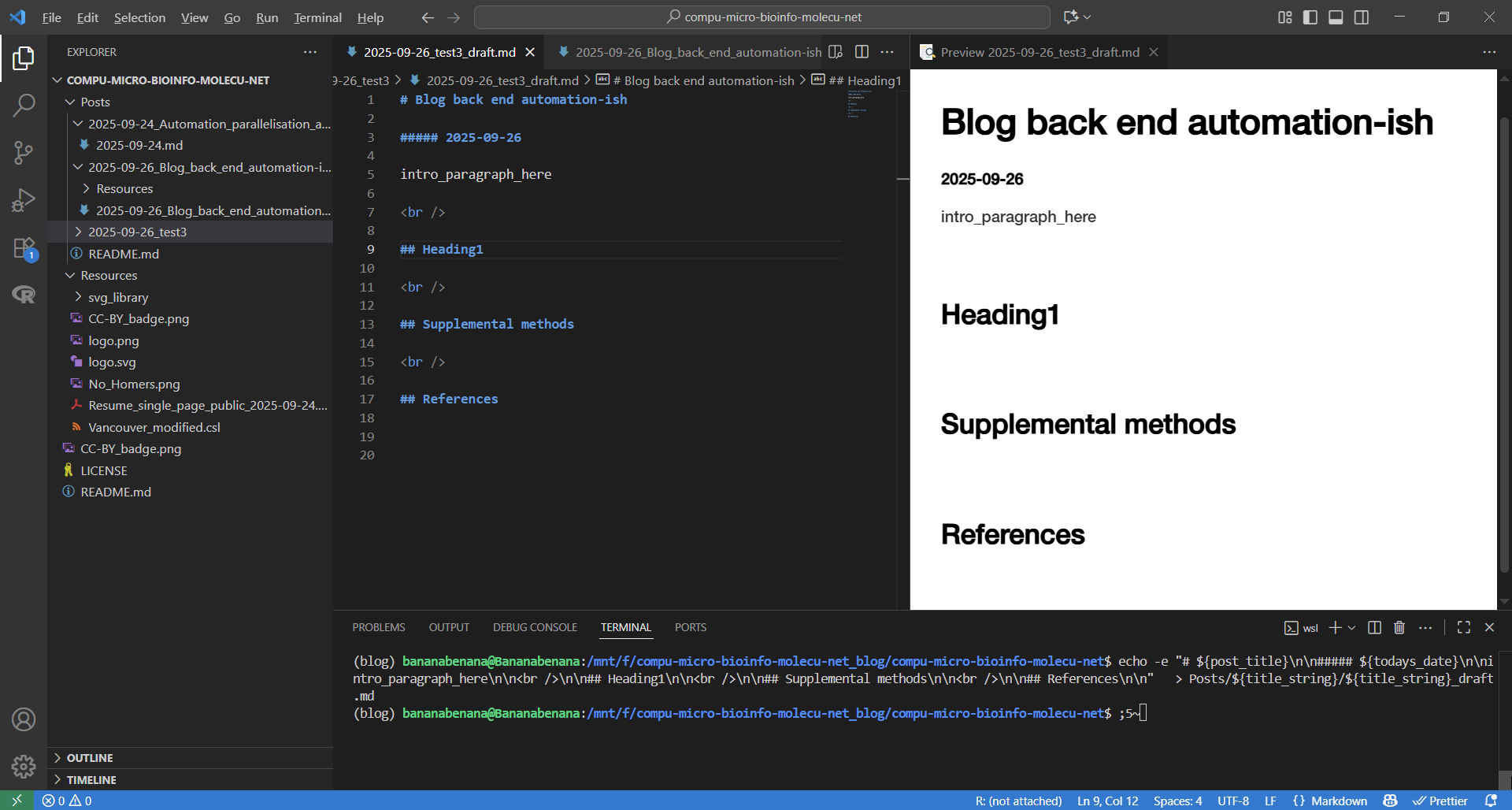
  <li>I write in <a href="https://code.%20visualstudio.com/">VSCode</a> v1.104.1 (1), with the incredibly helpful <a href="https://github.com/shd101wyy/vscode-markdown-preview-enhanced">Markdown Preview Enhanced</a> v0.8.19 (2) to see the mature markdown in real-time</li>
  <li>Citations are managed with <a href="https://www.zotero.org/">Zotero</a> v7.0.15 (3) with the <a href="https://github.com/retorquere/zotero-better-bibtex/releases/tag/v7.0.50">Better Bibtex for Zotero</a> v7.0.50 plugin (4). The VSCode plugin <a href="https://marketplace.visualstudio.com/items?itemName=jinvim.vscode-zotero">VSCode Zotero</a> v1.1.1 (5) is used to handle in-text citations and generation of the <code class="language-plaintext highlighter-rouge">references.bib</code>.</li>
</ul>

<figure class="centered-figure">
  <img src="/compu-micro-bioinfo-molecu-net/assets/post_assets/2025-09-26_Blog_back_end_automation-ish/2025-09-26_window.png" alt="VSCode with Markdown Preview Enhanced viewing the .md file from Step 1." style="height:350px; width:auto;" />
  <figcaption>
    <em>VSCode with Markdown Preview Enhanced viewing the .md file from Step 1.</em>
  </figcaption>
</figure>

<p><br /></p>

<p><strong>3.</strong> After painstakingly crafting a blog of the highest calibre - just perfect, <a href="https://youtu.be/nyoxtceA4Rg?si=HVRiwXofCxA5RRnF&amp;t=188">perfect in every way</a> - so perfect that it could reverse itself out from beyond a cosmic event horizon, I run pandoc v3.8 (6) using a modified <a href="../../Resources/Vancouver_modified.csl">Vancouver.csl</a> file to neatly generate the bibliography in markdown format:</p>

<div class="language-bash highlighter-rouge"><div class="highlight"><pre class="highlight"><code><span class="c"># Installed pandoc</span>
mamba create <span class="nt">-y</span> <span class="nt">-n</span> blog
mamba <span class="nb">install</span> <span class="nt">-y</span> <span class="nt">-n</span> blog conda-forge::pandoc

<span class="c"># Add bibliography with pandoc and generate the final post</span>
mamba activate blog
pandoc <span class="se">\</span>
  <span class="nt">--from</span><span class="o">=</span>markdown <span class="se">\</span>
  <span class="nt">--to</span><span class="o">=</span>gfm <span class="se">\</span>
  <span class="nt">--citeproc</span> <span class="se">\</span>
  <span class="nt">--bibliography</span><span class="o">=</span>references.bib <span class="se">\</span>
  <span class="nt">--csl</span><span class="o">=</span>Resources/Vancouver_modified.csl <span class="se">\</span>
  <span class="nt">--wrap</span><span class="o">=</span>none <span class="se">\</span>
  <span class="nt">-o</span> Posts/<span class="k">${</span><span class="nv">title_string</span><span class="k">}</span>/<span class="k">${</span><span class="nv">title_string</span><span class="k">}</span>.md <span class="se">\</span>
  Posts/<span class="k">${</span><span class="nv">title_string</span><span class="k">}</span>/<span class="k">${</span><span class="nv">title_string</span><span class="k">}</span>_draft.md
</code></pre></div></div>

<p><br /></p>

<p><strong>4.</strong> If everything looks good, the draft is moved out of the repo and it’s perfect imperfections are hurried away from potential readers eyes. The repo is then prepped for <code class="language-plaintext highlighter-rouge">git push</code> and the blog post goes live:</p>

<div class="language-bash highlighter-rouge"><div class="highlight"><pre class="highlight"><code><span class="c"># Move the draft out of the repo</span>
<span class="nb">mv </span>Posts/<span class="k">${</span><span class="nv">title_string</span><span class="k">}</span>/<span class="k">${</span><span class="nv">title_string</span><span class="k">}</span>_draft.md ../Drafts

<span class="c"># Create simlink called README.md so GitHub shows it as a main file, so I can keep the original file name - best of both worlds</span>
<span class="nb">ln</span> <span class="nt">-s</span> <span class="k">${</span><span class="nv">title_string</span><span class="k">}</span>.md Posts/<span class="k">${</span><span class="nv">title_string</span><span class="k">}</span>/README.md

<span class="c"># Move references file generated by VSCode Zotero in the root directory into the posts' Resource directory</span>
<span class="nb">mv </span>references.bib Posts/<span class="k">${</span><span class="nv">title_string</span><span class="k">}</span>/Resources

<span class="c"># Update archive table in Post/README.md</span>
<span class="nb">sed</span> <span class="nt">-i</span> <span class="s2">"6 i |[</span><span class="k">${</span><span class="nv">post_title</span><span class="k">}</span><span class="s2">](</span><span class="k">${</span><span class="nv">title_string</span><span class="k">}</span><span class="s2">) | </span><span class="k">${</span><span class="nv">todays_date</span><span class="k">}</span><span class="s2"> |"</span> Posts/README.md

<span class="c"># Add everything to repo</span>
git add <span class="nb">.</span>

<span class="c"># Commit changes</span>
git commit <span class="nt">-m</span> <span class="s2">"Post: </span><span class="k">${</span><span class="nv">title_string</span><span class="k">}</span><span class="s2">"</span>

<span class="c"># Push to main</span>
git push origin main
</code></pre></div></div>

<p><br /></p>

<p><strong>5.</strong> The post is now live:</p>

<figure class="centered-figure">
  <img src="/compu-micro-bioinfo-molecu-net/assets/post_assets/2025-09-26_Blog_back_end_automation-ish/2025-09-26_GH.png" alt="Live post viewed on GitHub." style="height:350px; width:auto;" />
  <figcaption>
    <em>Live post viewed on GitHub.</em>
  </figcaption>
</figure>

<p><br /></p>

<p>As a result of this development, I made a stupidly high number of test commits to this repo to experiment with the visual style that I was happy with and that GitHub would correctly display in browser. While I don’t <em>love</em> coding, I am obsessed what it allows me to do: less overall work. So, is this process overengineered? Probably. Was it worth the challenge to set this up and have systems in place? Yes. Always yes. Anything to maximise <em>sticktionlessness</em>.</p>

<p><br /></p>

<h2 id="supplemental-methods">Supplemental methods</h2>

<p>Data and project half-life figure generated using R v4.4.2 (7), RStudio v2024.12.1 (8), rstudioapi v0.17.1 (9), tidyverse v2.0.0 (10) and colorspace v2.1-1 (11). All figures and code in the Vector images drawn in Inkscape v1.3.2 (6). All figures and code in <a href="/assets/post_assets/2025-09-26_Blog_back_end_automation-ish">assets</a>. directory.</p>

<p><br /></p>

<h2 id="references">References</h2>

<div id="refs" class="references csl-bib-body" entry-spacing="0">

<div id="ref-VisualStudioCode" class="csl-entry">

<span class="csl-left-margin"><b>1</b>. </span><span class="csl-right-inline">Visual Studio Code - Code Editing. Redefined. &lt;https://code.visualstudio.com/&gt;</span>

</div>

<div id="ref-wangShd101wyyVscodemarkdownpreviewenhanced2025" class="csl-entry">

<span class="csl-left-margin"><b>2</b>. </span><span class="csl-right-inline">Wang Y. Vscode-markdown-preview-enhanced. 2025. &lt;https://github.com/shd101wyy/vscode-markdown-preview-enhanced&gt;</span>

</div>

<div id="ref-takatsZotero2025" class="csl-entry">

<span class="csl-left-margin"><b>3</b>. </span><span class="csl-right-inline">Takats S, Stillman D, Cheslack-Postava F, Bagdonas M, Jellinek M, Najdek T, et al. Zotero. 2025. &lt;https://www.zotero.org/&gt;</span>

</div>

<div id="ref-ZoterobetterbibtexMakeZotero" class="csl-entry">

<span class="csl-left-margin"><b>4</b>. </span><span class="csl-right-inline">Zotero-better-bibtex: Make Zotero effective for us LaTeX holdouts. &lt;https://github.com/retorquere/zotero-better-bibtex&gt;</span>

</div>

<div id="ref-leeJinvimVscodezotero2025" class="csl-entry">

<span class="csl-left-margin"><b>5</b>. </span><span class="csl-right-inline">Lee S. Vscode-zotero. 2025. &lt;https://github.com/jinvim/vscode-zotero&gt;</span>

</div>

<div id="ref-JgmPandocUniversal" class="csl-entry">

<span class="csl-left-margin"><b>6</b>. </span><span class="csl-right-inline">MacFarlane J. Pandoc: Universal markup converter. 2022. &lt;https://github.com/jgm/pandoc&gt;</span>

</div>

<div id="ref-rcoreteamLanguageEnvironmentStatistical2024" class="csl-entry">

<span class="csl-left-margin"><b>7</b>. </span><span class="csl-right-inline">Team RC. R: A Language and Environment for Statistical Computing. 2024. &lt;https://www.R-project.org/&gt;</span>

</div>

<div id="ref-positteamRStudioIntegratedDevelopment2025" class="csl-entry">

<span class="csl-left-margin"><b>8</b>. </span><span class="csl-right-inline">Posit-team. RStudio: Integrated Development Environment for R. 2025. &lt;http://www.posit.co/&gt;</span>

</div>

<div id="ref-usheyRstudioapiSafelyAccess2022" class="csl-entry">

<span class="csl-left-margin"><b>9</b>. </span><span class="csl-right-inline">Ushey K, Allaire J, Wickham H, Ritchie G. Rstudioapi: Safely Access the RStudio API. 2022. &lt;https://rstudio.github.io/rstudioapi/&gt;</span>

</div>

<div id="ref-wickhamWelcomeTidyverse2019" class="csl-entry">

<span class="csl-left-margin"><b>10</b>. </span><span class="csl-right-inline">Wickham H, Averick M, Bryan J, Chang W, McGowan LD, François R, et al. Welcome to the Tidyverse. Journal of Open Source Software. 2019 Nov 21; &lt;https://joss.theoj.org/papers/10.21105/joss.01686&gt;</span>

</div>

<div id="ref-zeileisColorspaceToolboxManipulating2020" class="csl-entry">

<span class="csl-left-margin"><b>11</b>. </span><span class="csl-right-inline">Zeileis A, Fisher JC, Hornik K, Ihaka R, McWhite CD, Murrell P, et al. Colorspace: A Toolbox for Manipulating and Assessing Colors and Palettes. Journal of Statistical Software. 2020 Nov 29; &lt;https://doi.org/10.18637/jss.v096.i01&gt;</span>

</div>

</div>]]></content><author><name>Ben Vezina</name><email>bd.vezina@gmail.com</email></author><summary type="html"><![CDATA[My usual relationship with extra-curricular projects has a half-life that’s measured in single afternoons rather than the desired weeks/months. As such, it was a bit of work figuring out the underlying tooling, workflow and architecture to make the blogging process sticky, yet frictionless as possible. In other words, I wanted to maximise sticktionlessness. For me, that starts with automation.]]></summary><media:thumbnail xmlns:media="http://search.yahoo.com/mrss/" url="https://bananabenana.github.io/compu-micro-bioinfo-molecu-net/assets/post_assets/2025-09-26_Blog_back_end_automation-ish/project_decay_line.png" /><media:content medium="image" url="https://bananabenana.github.io/compu-micro-bioinfo-molecu-net/assets/post_assets/2025-09-26_Blog_back_end_automation-ish/project_decay_line.png" xmlns:media="http://search.yahoo.com/mrss/" /></entry></feed>